What the black streaks are actually doing to a Baton Rouge roof
It is worth being precise about what those dark vertical trails are, because the answer changes what the right fix is. They are not dirt and they are not mildew. They are Gloeocapsa magma, a cyanobacteria that feeds on the limestone filler in asphalt shingle, which is why it spreads downward in the pattern it does and why rinsing it never works for long. Around Baton Rouge the conditions are close to ideal for it: near-daily summer rain, Gulf humidity that keeps the surface damp well into the evening, and the deep shade of live oaks that slows drying on the north slope and under the tree line. A roof that faces the sun all day may stay clean for years, while the shaded slope of the same roof streaks within a season or two. That is not two different roofs - it is the same shingle under two different drying schedules.
The reason to act is not only looks. Gloeocapsa holds moisture against the shingle and darkens the surface, and a dark, damp roof runs hotter and dries slower than a clean one. Over seasons that combination weathers the granules, ages the shingle faster, and can shorten the useful life of the roof. Cleaning it is preventive maintenance, not vanity - it removes the heat-trapping film and lets the roof shed water the way it was designed to.
Shingle, tile, and metal are three different jobs
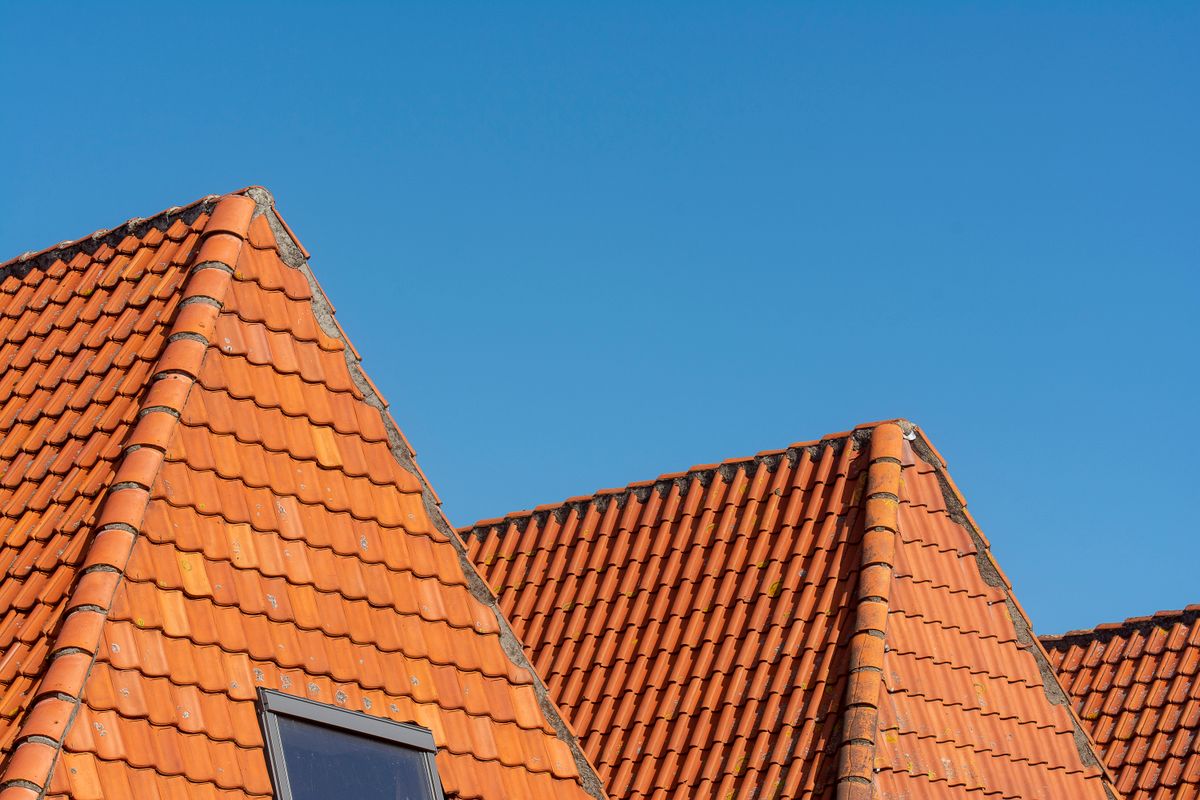
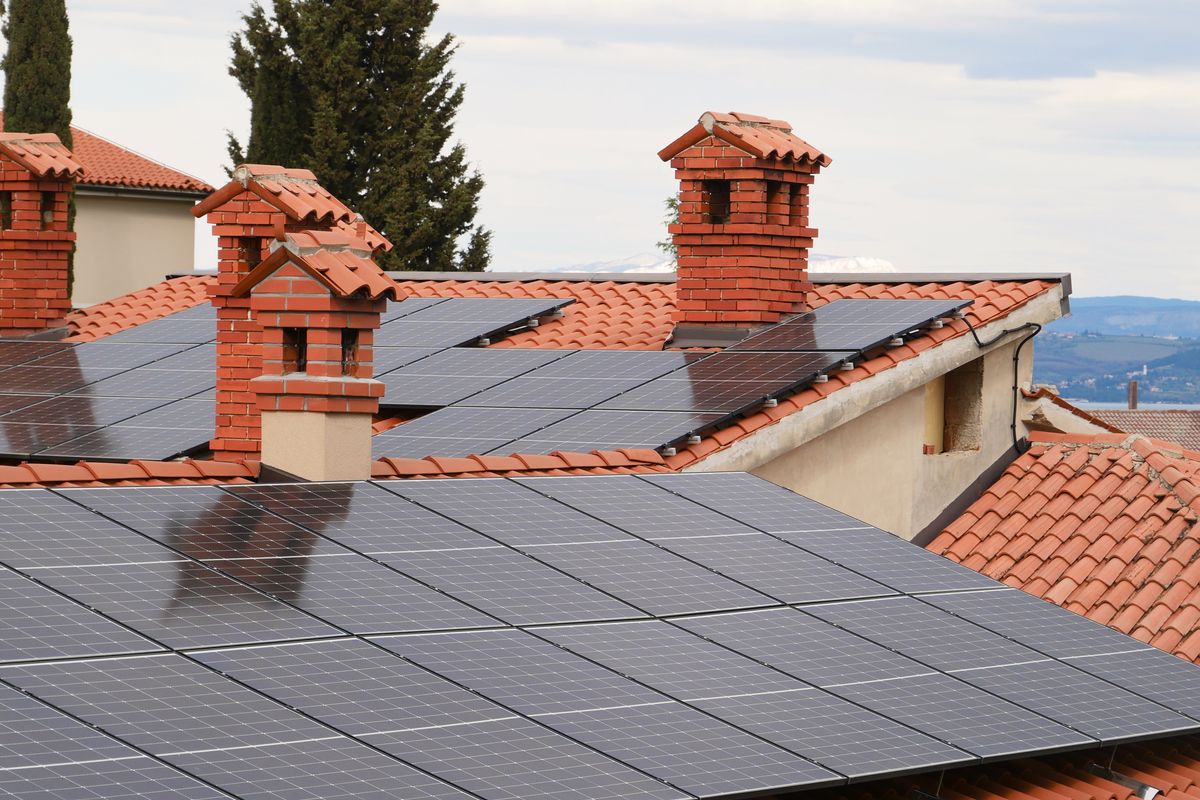
Most homes in the Capital Region are capped in asphalt shingle, and that is where the classic black streaking shows up. But Baton Rouge has plenty of tile and a growing number of metal roofs, and they do not behave the same way. Tile - the barrel and flat styles common on the newer subdivisions and on many older homes near the river - shows blotchy dark patches that hold moisture around the overlaps, and it is the easiest surface to crack if anyone walks it or hits it with pressure. Metal roofs rarely grow the same black streaks; they pick up a patchy film near the fasteners and under the tree line, and they need a gentler chemistry that will not dull the finish. A crew that treats every roof the same is not reading the material in front of them. We identify what we are standing on before the pump runs, because the wrong method on the right roof is how a cleaning turns into a repair.
Why high pressure has no place on a roof
This is the single most important thing to understand before you book anyone. A pressure washer is the wrong tool for a roof, full stop. High pressure strips the protective granules off asphalt shingle, forces water up under the tabs and into the seams, and can crack or dislodge tile - turning a cleaning into a roof repair that costs far more than the wash did. The correct method is a soft wash: a cleaning solution applied at low pressure that kills the algae and lichen at the root, given time to dwell, then rinsed gently so the dead growth and the chemistry come off together. The stain is gone and stays gone far longer than a surface blast, because the organism is dead rather than knocked off the surface to regrow from what is left behind. Shingle manufacturers direct that algae be removed this way, and a pressure-washed roof can void the warranty outright.
What a soft wash visit actually involves
On the day, expect the crew to walk the property first and look at the roof from the ground and from a ladder before anything is applied. The solution is mixed to the roof's material and the amount of growth, and it is applied at low pressure so it stays where it is put rather than atomizing into the air. It is given dwell time to work - longer on a shaded, heavily streaked slope, shorter on a sun-blasted one - and then rinsed gently from the ridge down so the runoff carries the dead growth off the roof rather than under the shingles. The gutters and the areas around the chimney and any dormers get direct attention, because that is where growth and debris collect first. Landscaping is protected: the beds are wetted down first and rinsed again at the end, and the crew keeps an eye on where the downspout empties so the rinse water does not scorch young plantings or pool against the foundation.
When to schedule it, and how often
There are two sensible windows in Baton Rouge. Late spring, after the oak and pine pollen has finished and been rinsed off by the first real storms, gets the roof clean going into the season you actually use the yard. Early fall, after the worst of the summer humidity has broken, resets the growth that built up through August and September and holds through winter. Washing mid-pollen is the one timing mistake worth avoiding - the roof is clean and then yellow again within days, and it reads as a job badly done when it was only badly timed.
How often depends on exposure more than the calendar. A south-facing roof in full sun may go two years comfortably. A shaded north slope under mature oaks - the kind of lot you find in the Garden District, off Perkins Road, or out toward Sherwood Forest - can streak again within twelve to eighteen months. The honest answer is to look at the shaded slope, because that is where the roof will tell you it is ready.
Why professional care beats a DIY spray
Roofs are steep, slippery when wet, and high enough that a fall is a serious injury rather than a nuisance. Cleaning one properly also means getting the chemistry right - too strong and it can damage the shingle or the landscaping below, too weak and it does not kill the growth at the root. A professional crew brings the ladders, the fall protection, the correct dilution, and the experience to read the material and the shade. That is the difference between a roof that comes back clean and stays clean, and one that looks partly improved and streaks again within months. If you are weighing a quote, ask what method they use and whether they protect the landscaping - a crew that reaches for a pressure wand on a roof, or that cannot tell you how the runoff is handled, is not the crew for the job.
Bundling roof care with the rest of the exterior
A clean roof sets the tone, but it does not exist in isolation. If the gutters overflow or the siding stays grimy, those surfaces push debris and organic material right back toward the eaves, and the roof re-seeds faster than it should. Many Baton Rouge homeowners bundle a roof soft wash with a house wash and a gutter brightening in one visit, which is usually cheaper than three separate trips and keeps the whole envelope on the same schedule. If you are not sure which the property needs, say so when you ask for a price and describe what you are seeing - streaks running down from the ridge point one way, a flat film across the walls points the other.