Central is the town that left the parish to run its own schools
Central does not feel like the rest of East Baton Rouge Parish, and the reason is history most residents already half-know. In April 2005 the communities along the Comite and Amite rivers voted to incorporate as a city, and the single biggest reason was schools - the state would only let Central run its own public system once it was a municipality. The new Central Community School System opened its doors in 2007, and it is why the city's boundary sits where it does. Today Central is the third-largest city in the parish, home to roughly 30,000 people, with its own police force, its own fire department, and a public school district - Central High's Wildcats leading it - that is consistently rated among the best in Louisiana.
That school-driven origin shows up in what the town is built like. Because incorporation preserved a largely residential, single-family character instead of annexing dense commercial growth, Central stays spread out and heavily wooded compared with the suburbs closer to the capital. That is a large part of its appeal, and it is also why exterior cleaning here is its own job rather than a copy of the work a few miles west across the parish line. The lots are bigger, the tree cover is deeper, and more of the town sits in the low, damp ground near the two rivers - all of which change what builds up on a house and how long a clean lasts.
Between the Comite and the Amite: a town with two kinds of ground
Central's edges are not drawn on a map in the ordinary way - two rivers do it for you. The Comite runs along the city's western boundary and the Amite along its eastern edge, the two joining near the town's southern corner, which is why locals sometimes call the place the town between the rivers. That geography matters far more on the ground than it does on paper. Properties near the river corridors sit lower, and when the Comite and Amite come out of their banks - most memorably in the August 2016 flood, which put water in thousands of Central homes - that low ground is where it happens. Interior Central, up on the slightly higher ground where the older houses and churches were built, drains differently and flooded far less.
The practical consequence for cleaning is that Central is not one uniform market, and treating it as one is how a wash goes wrong. The river-side neighborhoods that took on water in 2016 are full of rebuilt and elevated houses - new siding low to the ground, fresh brick, replacement trim, taller foundations - and washing those is a low-pressure, chemistry-first proposition, the exact situation we walk through in our guide to house washing in Central. The higher wooded interior is a different fight entirely: not flood recovery but a deep, permanent tree canopy that holds damp against walls and roofs long after the rain stops. A crew that quotes "Central" as a single flat market is missing the town it is standing in.
The big lots and the canopy: why clean here does not last as long
The defining feature of most Central homes, whether they sit on the old interior ground or out toward the newer subdivisions on the parish's eastern fringe, is the shade. Mature oaks, pines and sweetgums stand over the older lots off Hooper Road, Sullivan Road and the Greenwell Springs corridor, and a wall that never fully dries is a wall that regrows mildew and algae on a short cycle. Roofs fare no better - the damp, shaded shingle is exactly the surface where the black streaking that signals living growth takes hold, and clearing it is a soft-wash roof treatment rather than a blast. On the biggest wooded lots the growth pressure is continuous enough that a genuinely clean exterior here tends to announce itself again within about a season, which is not a sign the wash failed - it is what a canopy does.
The same canopy is why gutters are a recurring Central chore. Pine straw and oak leaf litter drop onto roofs for months at a time, and when that debris packs a gutter it turns into a dark, waterlogged mat that stains the fascia, backs up over the edge, and soaks the wall below it. On a heavily wooded lot a gutter clearing and brightening done in the fall is not cosmetic - it is the difference between rain moving away from the house and rain sitting against it. And where the canopy meets hardscape, the staining is not growth at all but tannin, the rust-brown dye that oak leaf litter leaches into concrete, pavers and light siding over a wet spell. Tannin is a stain rather than an organism, so the hypochlorite mix that clears algae will not touch it; it needs a dedicated treatment, which is why a straight "soft wash" quote sometimes leaves the driveway still brown.
The town's daily places, from the sports park to the shopping corridor
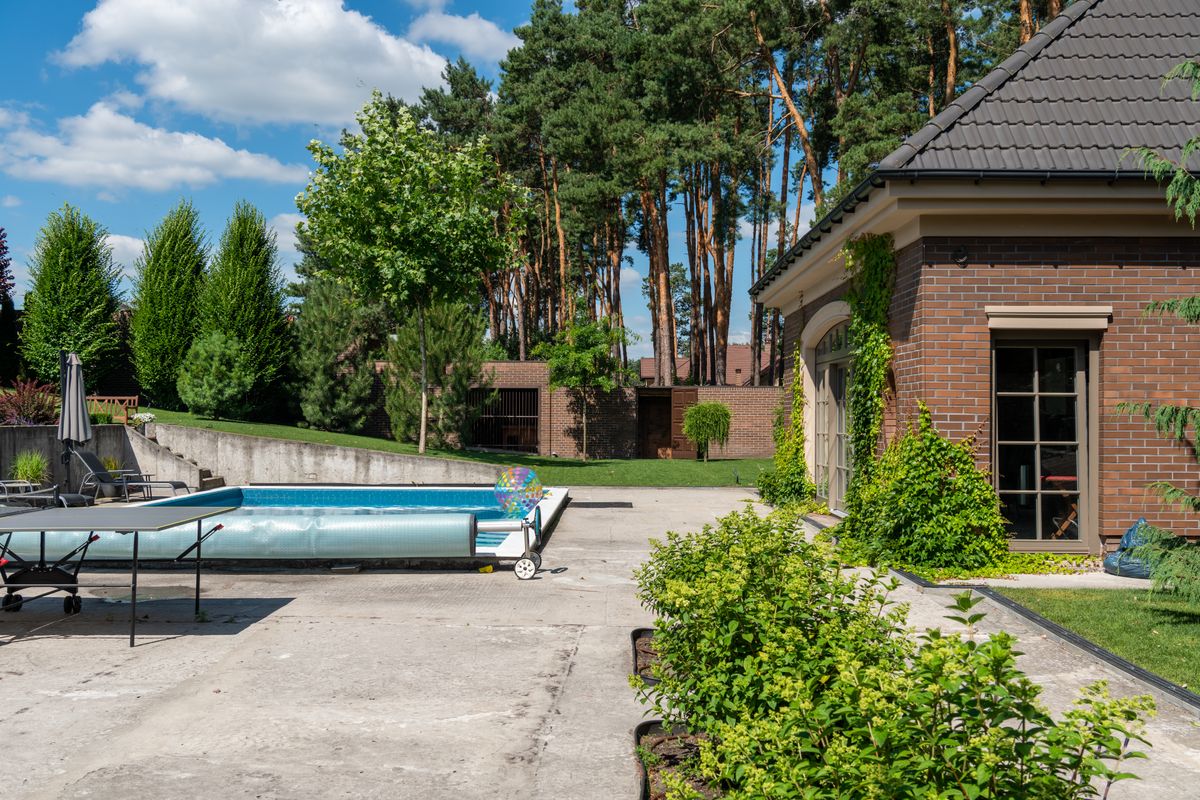
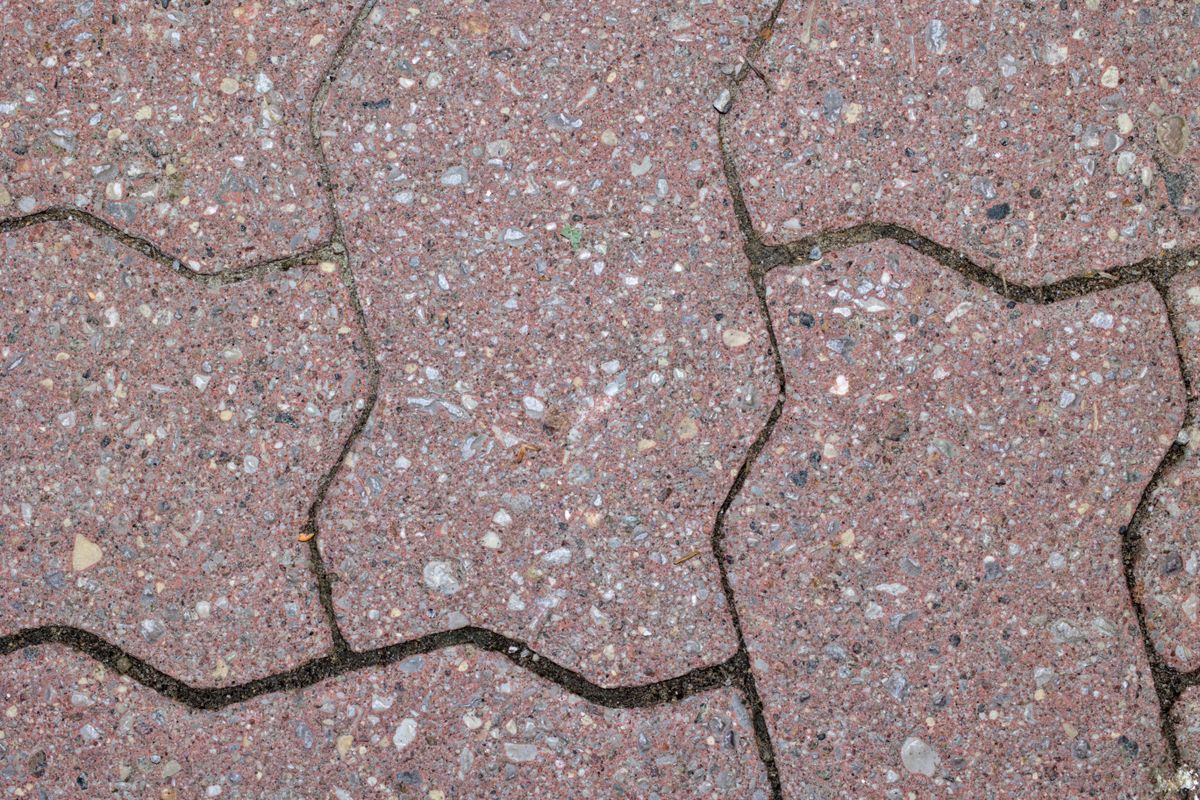
Central is a place people actually spend their days, and that daily life drives where grime shows up. The recreation side of town is anchored by the Central Sports Park, whose baseball and softball fields, multi-use pitches and fishing lake draw youth leagues and families through the spring and summer; the Blackwater Conservation Area and the splash pad at Jackson Park round out the outdoor side. All of that use lands on driveways, walkways, patios and the surfaces around schools and church halls - the hardscape that sees cleats, bicycles, pets and constant foot traffic. Louisiana clay and river silt track onto that concrete and, because much of it is newer and porous, it stains far faster than an older slab. A dedicated driveway and concrete cleaning is the realistic maintenance on these surfaces, and a paver sealing pass afterward is what keeps the color from coming straight back.
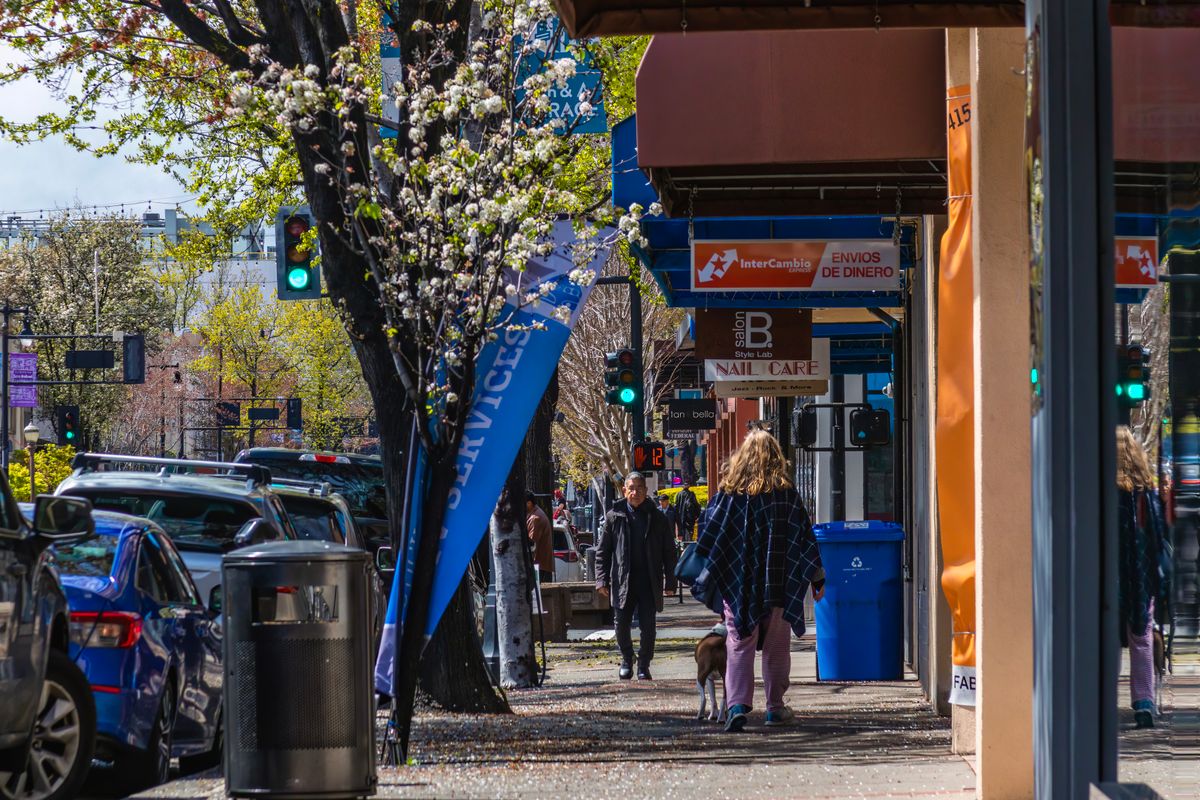
Commercial Central hugs two corridors: Sullivan Road and Hooper Road, whose shopping centers and small-business frontage serve the neighborhoods behind them. Storefronts along those roads face the same mildew and tannin as the houses, plus the tracked-in grime and traffic film that residential siding never sees. Keeping the walk clean, the storefront bright and the glass clear is what makes a strip read as open for business, and it is quick enough to fit around operating hours - the kind of work covered under a commercial pressure washing schedule. Because Central is such a residential town, the church and school buildings scattered through the interior are the real "civic" surfaces, and they respond to the same low-pressure method as the houses around them.
Matching the method to the half of Central you are on
If there is one thing to take away about cleaning a Central property, it is to match the approach to which part of town the house sits in rather than to a one-size price. On the low ground near the rivers, where so many homes were rebuilt or raised after 2016, the priority is protection of new materials - keep the pressure low, keep water out of the lower courses and fresh weep details, and let the cleaning chemistry do the work. On the dry wooded interior, the priority is keeping up with the canopy: clear the roof and gutters, treat the tannin on concrete and light siding, and accept that shade means a shorter interval between washes than a treeless lot would need. In both halves, spring after the pollen drop is the most useful single window, and a fall gutter clearing is worth doing every year on a wooded lot.
How a cleaner prices your home tells you almost everything about how it will be cleaned. Listen for whether the person on the phone wants to know which part of Central you are in, whether your house was rebuilt or elevated after the 2016 floods, what your exterior is made of, and whether the big oaks and pines sit directly over the roof. Those details change the method, so a provider who collects them before quoting is preparing to work on your actual property. A provider who names a number from a single photo of the front elevation is not reading your situation - on the river side that risks hard water being driven into new siding and brick, and on the wooded interior it means a wash that looks good for a few weeks and then grows back. Both halves deserve better than that. For a closer look at what the season should cost, our Greater Baton Rouge pricing guide walks through the numbers and what drives them.